
If you want to learn how to start a YouTube video, it all comes down to the first 10 seconds. That’s it. In that tiny window, you have to grab your audience with a killer promise, a question they can't ignore, or a quick flash of the amazing result you're about to show them.
Get this right, and you're not just giving viewers a reason to stick around—you're telling the YouTube algorithm that your video is worth watching.
Why Your First Few Seconds Make or Break Your Video
That first impression on YouTube isn't just a nice-to-have; it's everything. We spend hours, sometimes days, crafting the perfect video, but so many creators trip up on the most important part: the very beginning. This is your one shot to turn a curious click into a dedicated viewer.
The Algorithm Is Always Watching
At its core, the YouTube algorithm just wants to keep people on the platform. When someone clicks on your video and stays, it’s a massive signal that your content is doing its job. Good retention right from the start pumps up your "watch time," which is one of the biggest factors in getting your video recommended.
A strong opening tells YouTube a few key things:
- This video is legit: It delivers on what the title and thumbnail promised.
- People are hooked: Viewers aren't bouncing immediately, which signals quality.
- This is worth showing to more people: The algorithm gets the green light to push your video out to a wider audience.
On the flip side, a slow, boring, or confusing start tanks your video. It tells the algorithm your content couldn't hold anyone's attention, which basically puts a ceiling on how many people will ever see it. You can learn more about channel growth strategies from the pros at Tubentum.
One of the biggest mistakes I see is creators saving the best part for the end. On YouTube, you have to flip that script. Put the best part right at the beginning. Your intro isn't a welcome mat; it's a high-stakes pitch for someone's time.
The 10-Second Viewer Verdict
Let’s be honest, our attention spans are shot. And nowhere is that more obvious than on YouTube. With over 500 hours of video being uploaded every single minute, viewers have become experts at making split-second decisions. Most people decide if a video is for them within the first 10 seconds. You can dig into more of the data on viewer behavior with these global insights.
This isn't just a hunch; it's how people watch content now. Long, rambling intros, fancy branding animations, or asking for a sub before you've earned it are the fastest ways to get someone to click away. You've lost them before you even had a chance to show them what you’ve got.
How to Script an Unforgettable Video Hook
A great intro doesn't just happen; you have to design it long before you hit the record button. Forget the generic advice. Let's get practical and talk about scripting hooks that actually work, using a few proven formulas from creators who know their stuff. Think of your script as the blueprint for those first ten seconds that will make or break your video.
The goal here isn't a long-winded monologue. You need a short, sharp, and punchy opening that grabs attention right away. This is more important than ever, especially with the explosion of short-form content. Consider this: YouTube Shorts now pull in over 70 billion daily views, and their average engagement rate sits around 5.91%. This tells us that audiences are rewarding content that gets straight to the point. You can learn more about the impact of short-form video trends from The Desire Company.
This flowchart really hammers home the critical moment a viewer decides whether to stick around or click away.
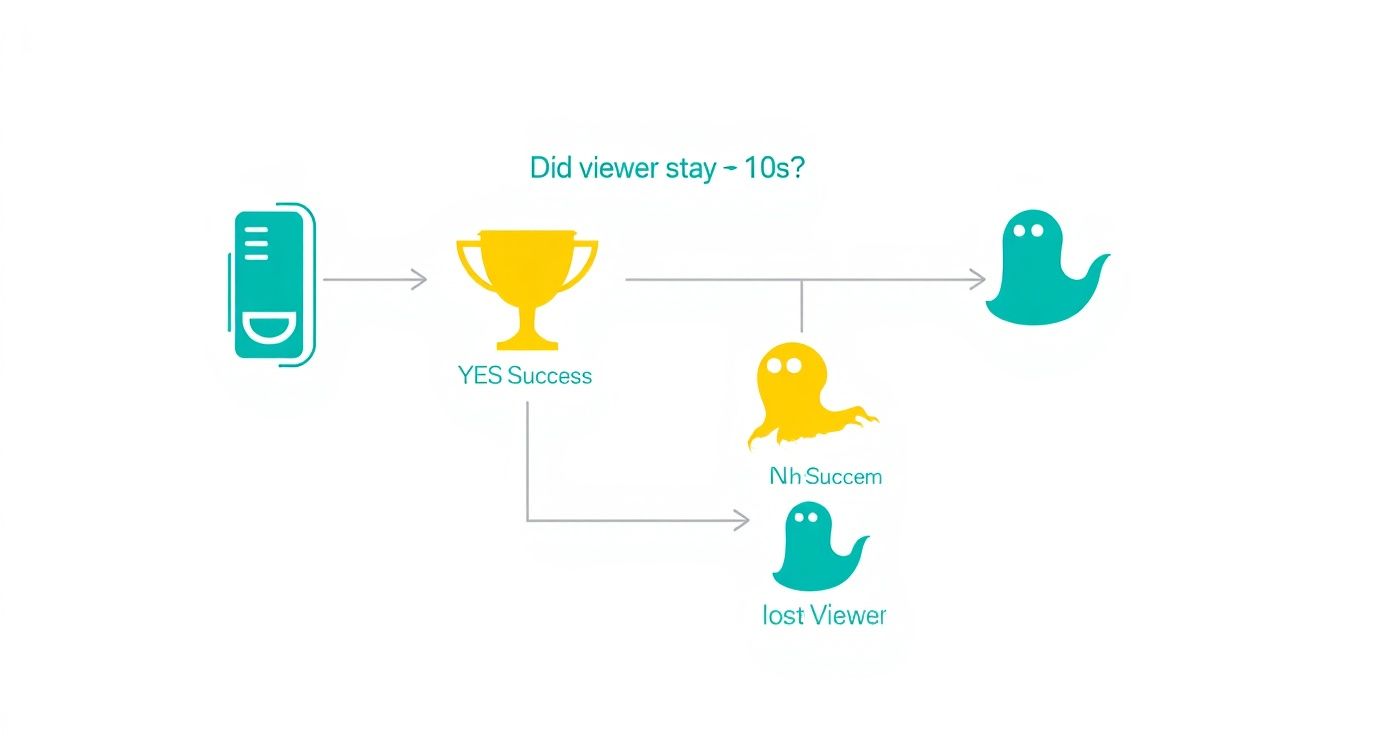
As you can see, the outcome of your first few seconds is incredibly simple: either you earn a viewer's time, or you lose them for good.
Proven Hook Formulas That Work
The good news is you don’t have to reinvent the wheel every time you script an intro. Instead, you can lean on a few battle-tested formulas that tap directly into viewer psychology.
Here are a few powerful structures I've seen work time and time again:
- The Bold Claim: Start with a strong, maybe even slightly controversial, statement that makes people stop and think. Something like, "You've been wasting hours on your video editing, and I'm going to show you why." It creates instant curiosity.
- The In Medias Res Opening: This classic storytelling trick means "in the middle of things." You drop the viewer right into the most exciting part of the action. A travel vlogger might kick off a video with, "And that's when I realized I was completely lost," before rewinding to explain the whole story.
- The Question Hook: Pose a direct question that your target audience is already thinking about. For a tech channel, it could be as simple as, "Is this new gadget really worth the hype? Let's find out." This promises a clear answer to a problem they already have.
Your hook is a promise. It’s a verbal contract with the viewer that you will deliver something valuable, interesting, or entertaining if they give you their attention. Break that promise, and you lose their trust forever.
Writing for Clarity and Impact
Once you’ve picked a formula, it's time to write the actual lines. My best advice? Keep your sentences short and your language simple. This isn't the time for industry jargon or rambling explanations. Your only goal is to be understood in seconds.
To give you a clearer picture, here's a look at different types of hooks and where they shine.
Comparison of Effective YouTube Video Hooks
This table breaks down a few popular hook types, explaining the best scenarios to use them in and giving you a quick script example for each.
| Hook Type | Best For | Example Script Snippet |
|---|---|---|
| Problem/Solution | Educational or tutorial videos where you're solving a specific pain point. | "If your houseplants keep dying, you’re probably making one of these three common mistakes." |
| Bold Statement | Opinion pieces or videos that challenge a common belief in your niche. | "Stop multitasking. It’s killing your productivity, and I have the data to prove it." |
| Intriguing Question | Explainer videos or deep dives that tap into viewer curiosity. | "What if everything you thought you knew about saving money was wrong?" |
| Story Teaser | Vlogs, documentaries, or any narrative-driven content. | "I packed my bags for a one-week trip. Little did I know, I wouldn't be coming home for a year." |
Picking the right hook really depends on your video's topic and the kind of audience you're trying to attract. The key is to make a strong, clear promise right at the start.
Honestly, writing your hook doesn't have to be some huge, daunting task. Just jot down three or four different versions and read them out loud. You'll find that the one that sounds the most natural and compelling is almost always your winner. For more practical creator tips, check out our other posts over on the Tubentum blog. This simple scripting step can completely change how you start a YouTube video.
Nail Your Setup for a Killer First Impression
You could write the most brilliant hook in the world, but if your video looks and sounds bad, viewers will click away before you even get to it. Getting your technical setup right for those first few seconds is absolutely crucial. It’s your first handshake with the viewer, and it instantly signals that you’re a professional who respects their time.

The good news? You don't need a Hollywood budget. The goal here is simple: eliminate distractions so your message is the star of the show. A few small tweaks to your camera, lighting, and audio can make a massive difference in how people see your content right from the start.
Frame Your Shot to Build a Connection
How you frame yourself on camera isn't just a technical detail; it’s a psychological one. It sets the entire tone for your video and can either draw viewers in or push them away.
To get this right from the moment you hit record, concentrate on a few simple things:
- Keep it Eye-Level: Always position your camera lens at eye level. If you’re looking down at the camera, it can come off as condescending. Looking up can feel timid. A straight-on, eye-level shot feels like you're having a real conversation with a friend.
- Use the Rule of Thirds: Picture your screen with a tic-tac-toe grid over it. Instead of sticking yourself right in the middle, try aligning your eyes with the top horizontal line. It’s just a more dynamic and visually interesting way to compose your shot.
- Clean Up Your Background: A cluttered, messy background is distracting and screams "amateur." You don't need a fancy studio—a clean wall, a tidy bookshelf, or even a simple backdrop works wonders. Just make sure the focus is on you.
Think of your frame as the viewer's window into your world. A stable, well-composed shot feels professional and inviting. A shaky, poorly framed video just feels chaotic and untrustworthy, giving them every reason to leave.
Good Lighting Makes All the Difference
If there's one thing that will instantly boost your video quality, it's good lighting. Dark, grainy footage is a surefire way to lose an audience. Luckily, you don't need a truck full of expensive gear.
Your best—and free—option is a big window with indirect sunlight. Just face the window, and let that soft, natural light work its magic. It’s incredibly flattering.
If you’re filming at night or in a room without good windows, a ring light or a single softbox is a fantastic and affordable investment. Place it in front of you, slightly above your eyeline, to get rid of any harsh shadows on your face. This one move can take your intro from looking like a webcam chat to a truly polished piece of content.
For a deeper look into the best gear and techniques creators are using, check out the guides in our Tubentum resources section.
Mastering Your On-Camera Delivery
You've got your script, your lights are on, and the camera is rolling. Now, it all comes down to you. The energy you project in those first few seconds is everything—it sets the mood for the whole video and decides if that hook you worked so hard on actually lands.
Looking confident and engaging on camera is a skill, not something you're born with. Even if your stomach is doing backflips, a few simple techniques can help you come across as authentic and natural. Tiny tweaks to how you talk, where you look, and how you hold yourself can make a world of difference.
Speak with Purpose and Pacing
How you say something is just as important as what you say. A flat, monotone voice can make the most fascinating topic sound like a snoozefest. On the other hand, a dynamic voice pulls people in and keeps them locked on your message.
Think of your voice as an instrument for guiding the viewer's attention. Here’s how to do it:
- Vary Your Pace: Don't talk at one constant speed. Slow down when you're making a really important point, then pick up the pace a bit when you're sharing something exciting.
- Adjust Your Volume: Leaning in a little and dropping your voice to a near-whisper can create a feeling of intimacy, like you're sharing a secret. Raising your voice, naturally, conveys passion and energy.
- Use Intentional Pauses: Silence is powerful. A quick pause right before you drop the main takeaway builds anticipation and gives your audience a split second to catch up.
The goal isn't to sound like a professional voice actor. It's about sounding like a more energetic, passionate version of yourself. Just read your script out loud a few times and think about which words you want to hit harder to make your point stick.
Connect Through the Lens
This might be the single most important (and easiest) trick in the book: talk to the camera lens, not the screen. Think of that little black circle as your viewer's eyes. It’s the digital version of making direct eye contact, and it's how you build a real connection.
It feels weird at first, I get it. Your natural impulse is to look at your own face on the flip-out screen or monitor. But to the person watching, it looks like you're staring off into space. When you lock your gaze on the lens, it creates the powerful illusion that you're talking directly to them.
Here’s a simple hack to get this right: stick a small, bright arrow-shaped sticky note right next to your lens, pointing at it. It's a constant, silly-looking reminder of where your focus should be. This one little thing helps your audience feel like they're in the room with you from the moment the video starts.
Editing Your Intro for Maximum Impact
Your on-camera performance is just the raw material. The real magic, the part that transforms a good take into a magnetic hook, happens in the editing suite. This is your last chance to grab a viewer and convince them to stick around.
Editing isn’t just about trimming the fat; it's about telling a better story, faster. With a few smart cuts, some simple graphics, and the right sound, you can crank up the energy of your intro and make your video's core promise impossible to ignore.
Cut Ruthlessly to Keep Things Moving
Your first job as an editor is to be absolutely merciless with your own footage. Every single frame in those first 15 seconds has to justify its existence. Think of long pauses and filler words as retention killers, because that's exactly what they are.
Here’s what to hunt down and eliminate:
- Kill every "um" and "ah." These little words sneak in when we're talking, but they instantly drain your authority and momentum on video. Get rid of them. No exceptions.
- Tighten the pauses. A pause that feels natural when you're speaking can feel like an eternity to a viewer. Cut the air between your sentences to create a snappier, more engaging pace.
- Embrace the jump cut. In the world of talking-head videos, jump cuts are your best friend. Cutting between takes, even mid-sentence, adds a dynamic energy that keeps the viewer's brain from drifting off.
Your editing timeline for the intro should look like a battlefield. Be aggressive. If a clip doesn't directly contribute to the hook, it has to go. The goal here is relentless forward motion.
The Power of the Cold Open
One of the most potent editing tricks in the book is the cold open, sometimes called a preview hook. It's simple: you find the most exciting, surprising, or valuable clip from later in your video and drop a tiny 3-5 second piece of it right at the very beginning.
Let's say you're making a video about building a desk. Instead of starting with, "Hey guys, today we're going to build a desk," you could start with a flash of the stunning, finished product. You immediately show the viewer the prize, making them want to see exactly how you got there.
This works because it instantly answers the viewer’s silent question: "What's in it for me?" By showing them the result first, you give them a powerful reason to stay. After that quick preview, you can then cut to your more traditional introduction.
Punch Up Your Hook with Visuals and Sound
Don't rely on just your words to do all the heavy lifting. Smart editing layers in simple visual and audio elements to make your hook land with way more force. These little additions are what separate amateur videos from professional-looking content.
Try sprinkling in a few of these:
- Text Overlays: As you state the main promise of your video, pop up a clean, bold text graphic that repeats it. This hammers the point home, especially for viewers watching on mute.
- B-Roll: If you claim a tip will save viewers time, show a quick shot of a clock speeding up or someone looking stressed. Visuals are emotional shortcuts that help sell your idea.
- Sound Effects: You'd be amazed what a subtle "swoosh" as text appears or a gentle musical sting under your cold open can do. It adds a layer of polish and energy that keeps people tuned in.
Ultimately, editing is about crafting an experience. It’s your opportunity to sharpen your intro until it’s a tight, compelling, and irresistible promise of the value that's about to come.
Common Questions About Starting YouTube Videos
Even with the best game plan, you're bound to have questions when you're figuring out how to nail your YouTube video intros. Let's clear up some of the most common ones I hear from creators. Getting these right will help you avoid some classic mistakes and feel way more confident hitting that record button.
How Long Should a YouTube Intro Actually Be?
This is the big one, right? The answer is surprisingly simple: aim for 5 to 15 seconds. That’s it. Your goal isn't a long, cinematic opening—it's to give someone a powerful reason to stick around, and to do it fast. Once you've got them hooked, you can flow right into your main content.
A lot of creators still think they need a flashy, branded intro sequence or a fancy animated logo. Honestly, in today's world, those are retention killers. Viewers have zero patience for them. Jump straight into the good stuff. You can weave in your branding more naturally later on.
Should I Introduce Myself Right Away?
Please don't. Your number one job is to hook the viewer, not to tell them your name. Starting with, "Hey guys, my name is..." is a surefire way to waste those precious opening seconds and lose a potential viewer. You have to earn their attention first.
Once you’ve delivered your hook—whether it’s a bold promise or a burning question—then you can give a quick, "I'm [Your Name], and today we're talking about..." as you transition. Your subscribers already know you, and new viewers care about what you can do for them, not who you are just yet.
What's the Single Biggest Mistake Creators Make?
Easy. They waste the viewer's time. It’s the cardinal sin of YouTube intros, and it shows up in a few different ways.
Some of the most common time-wasters are:
- Those long, unskippable animated logos I mentioned.
- Asking people to like and subscribe before you've given them a single reason to.
- A slow, rambling start that meanders and takes forever to get to the point.
You have to assume you've got less than 10 seconds to convince someone your video is worth their time. Your opening must instantly connect back to the promise you made in your title and thumbnail. Everything else is just static that makes people click away.
Your intro isn't an appetizer; it's the first bite of the main course. If that first bite is bland, nobody is sticking around for the rest of the meal. Make it count.
Do I Need a Different Kind of Hook for Shorts?
Absolutely. You have to adapt your strategy for the format. With YouTube Shorts, your hook has to be instantaneous—we're talking the first 1-2 seconds. There's no room for a gradual build-up. The punchline, the value, the crazy visual—it has to happen immediately.
For your regular long-form videos, you have a little more breathing room, that 5-15 second window, to pose a question, tell a quick story, or set the scene. The principle is the same—deliver value upfront—but the speed for Shorts is dialed up to eleven.
Ready to stop wasting time on manual edits? Tubentum auto-edits your talking head videos in one click. It automatically removes silences, filler words, and repeated speech, and even places powerful hooks in your intro to boost retention. Try it now at https://tubentum.com.